
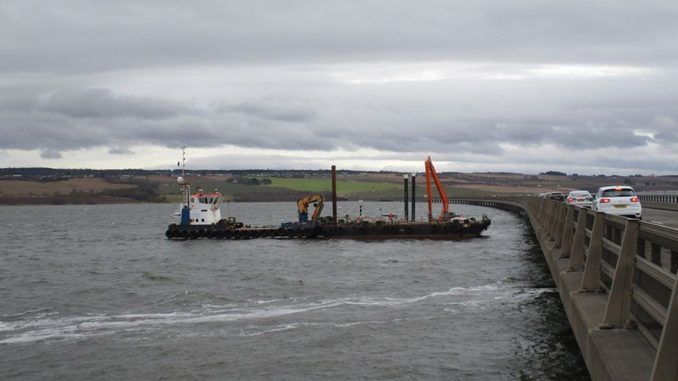
River scour is a natural erosion process caused by the movement of water which removes sediment from around structures on the riverbed or seabed.
Whilst it is a normal phenomenon which has always existed, scour is posing an increasing risk to critical infrastructure because of climate change and the number of pipe networks buried underwater.
Natural waterways provide obvious channels through which to run pipelines including water supply, sewage outfalls, oil and gas and communication conduits.
But when river scour exposes these pipes, it can compromise their structural integrity, safety and long-term functionality.
What is river scour?
River scour occurs when flowing water is fast enough to pick up and transport soil or sediment particles. Over time, this creates erosion zones – particularly around obstacles which disrupt flow patterns such as bridge piers, seabed features or pipelines themselves.
There are several types of scour which impact underwater pipes:
- General scour: Widespread lowering of the seabed or riverbed due to long-term changes in flow or sediment supply.
- Local scour: Concentrated erosion around a structure caused by flow acceleration and turbulence.
- Contraction scour: Erosion resulting from a narrowing of the flow area, which increases water velocity.
Pipelines are often buried in river and seabeds in an attempt to protect them from external forces. But scour can gradually remove the cover of even the deepest pipes, leaving them exposed and vulnerable to damage.
How river scour exposes underwater pipes
When sediment is eroded from around a buried pipeline, sections of the pipe can become partially or fully exposed. In some cases, the pipe may become unsupported, creating free spans where it bridges across a scoured area.
These free spans are particularly dangerous because they introduce stresses the pipe was not originally designed to withstand.
There are several reasons why scour is happening more often and therefore uncovering more underwater pipelines. External factors such as dredging river and seabeds or construction close to waterways can intensify scour.
Climate change is also leading to an increase in river scour events. More rainfall leads to rising water levels, speeding up rivers and enabling them to wash away more sediment.
Dangers posed to pipe networks exposed by scour
The exposure of underwater pipes due to river scour can lead to several serious hazards. Structural failure is the most damaging when unsupported pipes experience bending, vibration and fatigue. Over time, this can cause cracking, buckling or complete rupture.
Exposed pipes are also at increased risk of leakage. They are more vulnerable to corrosion, impact from debris, collisions with anchors or vessels and mechanical damage.
A breach can result in leaks that are costly, environmentally damaging and which require a complex underwater pipe repair application.
On the subject of the environment, pipeline failure as a result of river scour can have environmental consequences. If the pipe carries sewage, chemicals or hydrocarbons, it can contaminate water bodies, harm aquatic ecosystems and pose risks to human health.
Lastly, exposed pipelines are safety hazards. Gas or oil pipelines open to damage are at increased risk of fire, explosions or toxic exposure.
Mitigation and management of underwater pipelines exposed by scour
To reduce the dangers of river scour, engineers and asset owners implement several strategies including protective measures and adequate monitoring.
One obvious way to protect a pipeline is by burying it deeper beneath the riverbed. The more sediment covering the pipe, the greater amount and power of scour needed to expose it.
Relying on river sediment though is to put pipeline safety in the hands of nature. A decision not without risk – especially when the pipe is installed in one of the world’s fastest moving rivers.
A pipeline can be given enhanced protective measures alongside that provided by the riverbed. Rock dumping, mattresses and concrete covers are all popular options.
Pipelines can also be wrapped using a composite pipe repair bandage to protect against river scour like SylWrap. The fast working resin in SylWrap is water activated and sets rock hard in minutes as it is wrapped and smoothed around a pipe, curing to form a thick, impact resistant protective sleeve.
Regular inspection and monitoring of underwater pipelines using sonar surveys and ROV can highlight at-risk sections. Measure can then be taken to reinforce pipes before they become fully exposed and vulnerable to damage.
It is also possible for technology to model riverbed scour and predict where it might occur. Modelling is now an important part of the design phase for major underwater pipelines.
Because scour is often gradual and may go unnoticed until significant exposure has already taken place, early detection and proactive management are critical.
The importance of protecting pipes against scour
River scour is a powerful and persistent natural process that can undermine the safety and reliability of underwater pipe networks.
By removing sediment and exposing pipes, scour increases the likelihood of structural damage, environmental harm and costly failures.
Understanding how scour occurs and implementing appropriate protective and monitoring measures are essential steps in ensuring the long-term resilience of underwater pipelines in rivers, coastal zones and offshore environments.
Especially in an era where climate change is driving higher rain fall, flooding and more extreme weather events to increase the frequency of river scour.
Leave a Reply