
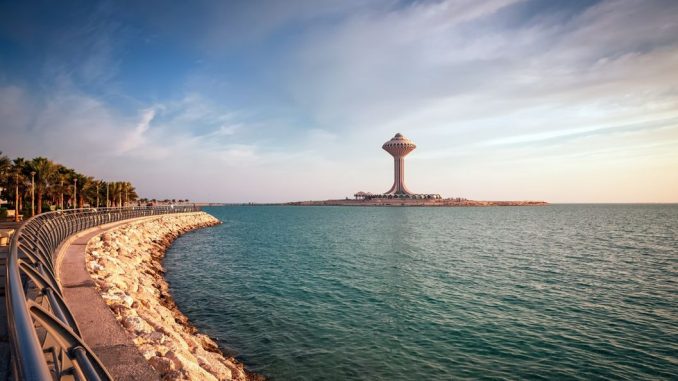
A modern coastal city on the Arabian Gulf, Dammam stands today as the oil capital of Saudi Arabia and one of the most important export hubs in the world.
It has not always been this way, however. Before the 1930s, Dammam was a small fishing settlement. But the discovery of oil changed not just Dammam but the entire Kingdom of Saudi Arabia.
Shaped by geology, global economics, foreign investment and national ambition, this is the fascinating story of Dammam.
Dammam – the modest coast settlement
Dammam was once a relatively insignificant settlement along the eastern coast of the Arabian Peninsula. Like many Gulf communities, its economy relied on fishing, pearling and small-scale trade. The region was sparsely populated, with limited infrastructure and little global attention.
This began to change in the early 20th century. Under King Abdulaziz Ibn Saud, the recently unified Kingdom of Saudi Arabia started seeking new sources of revenue.
The global economic instability of the 1920s and 1930s reduced the number of pilgrims who could afford to visit Mecca. Religious pilgrimage had been a major source of income for the Kingdom and so the drop in visitors was keenly felt.
Early oil exploration in Saudi Arabia focuses on Dammam
Needing to diversify and find other economic opportunities, Saudi Arabia asked other foreign governments if they would like to carry out exploratory drilling for oil in exchange for gold.
The United Kingdom was one of those countries. But the UK government turned down the invitation in 1932 with a diplomat saying no-one “would want to sink capital in a little-known country.” Hindsight is a wonderful thing and all that.
12 months later and the Saudis signed an oil concession agreement in 1933 with the Standard Oil Company of California (SOCAL). The agreement granted the American company the right to explore beneath the kingdom for oil.
SOCAL established a subsidiary – the California Arabian Standard Oil Company (CASOC) – to carry out the exploration work.
Geologists quickly identified a geographical structure known as the Dammam Dome near the village of Damman as a promising site for drilling.
Exploration began in the mid-1930s. Several wells were drilled in succession. Early results were disappointing. Many of the wells failed to produce oil in commercially viable quantities.
Despite these setbacks, the persistence of chief geologist Max Steineke proved crucial. Steineke insisted on drilling deeper. Even when others were ready to abandon the effort. This decision to keep going would ultimately change history.
The big Saudi Arabia oil breakthrough at Dammam Well No. 7
After years of trial and error, March 1938 finally yielded a breakthrough. Drilling at Dammam Well No. 7 struck oil in commercial quantities. The well later become known as the ‘Prosperity Well’ and it marked the first successful oil discovery in Saudi Arabia.
The impact was immediate and profound. Within months, infrastructure was built to support oil extraction. Storage facilities, pipelines and export terminals were all quickly constructed.
By September 1938, oil was being shipped from Dammam to refineries in Bahrain. By 1939, Saudi Arabia exported its first shipment of crude oil to international markets.
Dammam Well No. 7 had confirmed that Saudi Arabia possessed vast petroleum reserves – laying the foundation for its future as a global energy superpower.
Rapid transformation of Dammam into an oil hub
The initial constriction of infrastructure to support oil extraction was only the start for Dammam. An influx of workers, engineers and investment led to rapid urbanisation and population growth.
New roads, rail connections and ports soon followed. This once-small fishing village became a booming industrial centre; the hub of oil production and administration in Saudi Arabia.
Dammam Well No. 7 impacted on surrounding villages and towns too. Nearby Dhahran was where many oil companies established their headquarters. Al Khobar became a major commercial centre.
Those three settlements were oil boomtowns which are now intrinsically linked as major petroleum and natural gas cities.
Infrastructure and strategic development
The growth of Dammam would not have been possible without the Saudi government. Recognising the importance of oil revenues, it invested heavily in the aforementioned infrastructure to facilitate production and export.
One of the earliest developments was the construction of pipelines connecting the oil fields to the port of Ras Tanura, enabling large-scale exports.
Transportation networks expanded rapidly. Direct road and rail links connected Dammam with Riyadh, the capital. Dhahran International Airport opened in 1961 and King Fahd International Airport in 1999 to cater for the increasing number of international visitors to the region.
These developments turned Dammam into a logistical and industrial powerhouse, capable of supporting one of the largest oil industries in the world.
And that industry goes beyond just oil production. It is supported by export and logistics, power generation and desalination. Dammam is also home to leading companies specialising in pipeline installation chemical pipe repair in Saudi Arabia.
The rise of Saudi Aramco
As oil production expanded beyond Dammam, the California Arabian Standard Oil Company evolved into the Arabian American Oil Company. Otherwise known as Aramco. And today known as Saudi Aramco – the largest oil company in the world.
Dammam and its surrounding region became the operational heart of Aramco. The company’s growth mirrored the expansion of Saudi Arabia’s oil industry, which eventually came to hold a significant share of global oil reserves and production.
The wealth generated by oil exports transformed Saudi Arabia’s economy. It enabled massive investments in infrastructure, education, healthcare and urban development. As one of the key centres of this industry, Dammam benefited enormously.
Urban growth and regional integration
Rapid expansion of the oil industry eventually led to Dammam, Dharan, Al Khobar and other neighbouring cities being merged into Dammam metropolitan area. This urban region in turn became the capital of the Eastern Province, the most oil-rich region in Saudi Arabia.
Population growth has been equally dramatic. From small, separate settlements with only a few hundred residents in the early 20th century, today the metropolitan region is home to 2,805,632 as of the 2022 Saudi census.
Whilst oil brought prosperity to this area of Saudi Arabia, it is no longer the sole industry in Dammam. The city’s economy diversified over time with developments in agriculture, education and other sectors.
Oil is still king and shapes the identity and global significance of Dammam – but there is much more to the area than just chemicals.
A rise to prominence which stared in 1938
Dammam’s rise to prominence is inseparable from the discovery of oil in 1938. Yes, it benefited from several factors. Starting with US expertise to drill and then develop the oil industry.
Heavy investment from the Saudi government created the infrastructure. The location of Dammam on the Arabian Gulf facilitated easy export to international markets. And the proximity of Dhahran and Al Khobar created a powerful economic cluster focused on energy production.
But without Dammam Well No. 7, none of it would have been possible. What began as a risky exploration project which did not yield great results at first turned into one of the most significant oil discoveries in modern history.
The success of Dammam Well No. 7 not only transformed a small coastal town into a thriving industrial city but also propelled Saudi Arabia onto the global stage as a leading oil producer.
Almost a century later, Dammam remains a vital centre of the enery section in Saudi Arabia. Its oil industry continues to drive economic growth, influence global markets and shape the world.
The story of Dammam is in many ways the story of Saudi Arabia’s oil age, its rise and its enduring impact on the modern world.
Leave a Reply