
When people think about burst pipes, they usually picture winter – frozen water expanding inside a pipe until it splits. But as Europe bakes in summer heatwave after heatwave, leaking pipes caused by extreme hot and dry spells are becoming a real problem.
It seems counterintuitive. How can heat break something which is designed to survive boiling water? The answer has less to do with the pipework itself and more to do with what is happening around it.
Here are five reasons why pipes end up breaking and leaking in a heatwave.
1) The ground dries out and shrinks causing pipe movement
Ground conditions are the single biggest culprit. Especially for underground water and sewer lines. Soil holds moisture and that moisture gives it volume and mass.
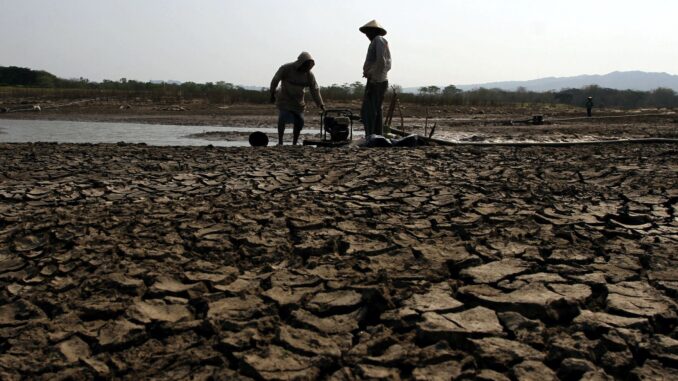
During a prolonged heatwave with little rain, soil loses this water and contracts. The longer the dry spell, the more dramatic the collapse.
So, the ground somewhere like Wisley in the United Kingdom which has set a new record by going 50 days without rain is in big trouble.
Clay-heavy soil is the worst offender from ground shrinkage, since it cracks significantly as it dries. This is a significant issue for the UK, with 25 percent of the country classed as clay-heavy.
As the ground dries out and contracts, it no longer supports underground pipes evenly. Sections which used to sit snugly in moist, stable soil are suddenly hanging in gaps or being squeezed unevenly as the earth settles.
That movement bends, twists, or puts direct pressure on pipe joints. If a section was already old, corroded or weak, this pressure is often enough to crack or separate it.
Applications like shared water supply pipe repair therefore become more common in heatwaves as pipework buried beneath bone-dry gardens becomes damaged by ground movement.
The same ground movement, incidentally, which you can see at surface level. If you ever notice a crack opening up between your patio and the soil during a dry summer, that is also what is happening around underground pipework.
2) Thermal expansion and contraction in a heatwave causes leaking pipes
Materials including copper, galvanised steel and even some plastic pipework expand slightly when heated and contract as they cool.
A heatwave takes this daily cycle to an extreme. Pipes heat up under the sun or from hot ground temperatures during the day. Then contract again overnight.
This repeated flexing stresses joints, solder points, and fittings. It rarely causes a sudden failure on its own, but it wears down connections that are already ageing, making them more likely to give way.
3) Increased water demand puts more pressure on pipes during a heatwave
Hot weather changes how we use water. More showers, more laundry, more lawn and garden watering. Daily household water use can jump noticeably during summer.
That extra demand strains a system which is already under stress from the aforementioned ground movement and heat. Older pipes, worn joints or existing minor leaks are far more likely to fail when pressure surges through increased demand than outside a heatwave when water flows more steady.
4) Tree roots come into contact with pipes in the chase for moisture
As the topsoil dries out, tree and shrub roots grow deeper and more aggressively in search of water. Pipes then often become the nearest reliable source.
Roots can wrap around pipe joints or find their way into small existing cracks, prying them wider or blocking flow. This is especially common with sewer lines, where roots are drawn to both moisture and nutrients.
5) Heat accelerates corrosion
Heat speeds up chemical reactions, including the rusting and corrosion of metal pipes. Galvanised steel and cast iron pipes are particularly vulnerable.
A summer of high temperatures can accelerate the wearing process on plumbing that was already nearing the end of its lifespan, pushing such pipes and fittings to breaking point.
The longer the heatwave goes on, the bigger the problems for pipework
Pipes rarely burst the moment a heatwave starts. Stress typically builds up over days, weeks or in the case of the summer of 2026 – months.
Soil shrinks a little more each dry day. Joints flex a little more each hot afternoon. Water pressure fluctuates a little more each week.
Eventually, a weakened point gives out. It looks like it happened out of nowhere. But the reality is the heatwave finally pushed the pipe to breaking point – often combining with age and corrosion.
How to repair leaking pipes caused by the heatwave
When a heatwave causes pipes to burst and start leaking, a fast response time is important. Water is already scarce in a heatwave because of the extra demands placed on supplies. Losing it to leaks is costly.
A SylWrap Pipe Repair Kit enables any user to permanently seal a leaking pipe in under 30 minutes even where pressure cannot be turned off.
No training is needed to make a SylWrap repair. It follows a simple two-stage process of sealing the leak with either epoxy putty or pipe repair tape and then overwrapping with SylWrap HD Pipe Repair Bandage.
Repairs are effective on pipes of all diameters and materials. SylWrap has WRAS approval for use with drinking water and is pressure resistant to 30 bar.
Hot weather does not get the same reputation as freezing temperatures when it comes to plumbing. But the stresses a heatwave puts on pipes are strikingly similar.
It is just soil contraction and heat cycling doing the damage instead of ice.
Leave a Reply