
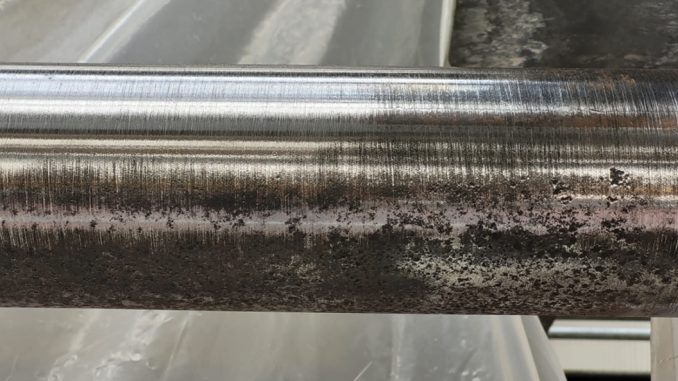
Preventing pipework failure before it happens avoids costly leaks, system failures and safety hazards. And one of the most effective ways of spotting potential problems is by looking for early signs of pipe surface damage.
Pipes are everywhere. They are the backbone of plumbing and industrial systems. Silently performing critical roles behind walls, beneath floors and under towns and cities.
However, like any infrastructure component, they are susceptible to wear and tear over time. Catching this wear and tear in the form of pipe surface damage is crucial to preventing costly leaks, system failures and safety hazards.
Here are eight early indicators of surface deterioration across various pipe materials and environments to watch out for.
1) Discolouration and rust
For metal pipes — especially steel and iron — discolouration is one of the first visible signs of surface damage. Reddish-brown rust patches or general dullness may indicate oxidation.
Whilst surface rust may seem superficial, it can quickly lead to deeper corrosion and pipework being breached. Especially in environments with high humidity or poor ventilation.
If looking for discolouration or rust, pipe joints and pipe welds are the best places to inspect closely. These areas are particularly prone to early corrosion.
2) Blistering or peeling coatings
Pipes are often protected by paint, insulation or specialised coatings. When these protective layers begin to bubble, peel or blister, it is usually a sign that moisture or corrosive agents have breached the surface.
This kind of damage often precedes more serious internal corrosion or degradation. It is particularly prevalent in industries handling aggressive substances which can compromise protective coatings quickly – like chemical processing, marine, and oil and gas.
3) Pitting and surface craters
Pitting corrosion presents as tiny, pinhole-sized craters on the surface of metal pipes. It is dangerous because it can penetrate deeply into the material without significant visible surface damage.
The hidden nature of pitting allows it to cause sudden pipe failure without any warning. Even if the pipe appears structurally sound externally.
Stainless steel and copper pipes are particularly vulnerable to pitting and corrosion under certain conditions, such as exposure to chlorides or stagnant water.
4) Scratches, gouges and abrasion damage to pipe surface
Physical surface damage can occur from improper handling during installation, contact with sharp objects or long-term vibration against nearby structures.
These minor abrasions can act as initiation points for corrosion. Especially when combined with moisture or chemicals.
Which is why it is important to repair abrasion damage when it occurs as a preventative measure against corrosion.
Pipes in high-vibration environments should also be properly supported to reduce movement and protected from mechanical contact.
5) Surface cracks and hairline fractures
Hairline fractures are often hard to detect but can emerge from thermal cycling, pressure fluctuations or material fatigue. These cracks compromise the integrity of the pipe and may eventually lead to leaks or bursts.
One way in which it is possible to detect fine cracks in metal pipes is via dye penetrant testing or magnetic particle inspection.
6) Unusual residue or staining
Green or white residue on copper pipes typically signals oxidation or mineral buildup from a slow leak. In other materials, dark or chalky spots may indicate chemical deposits.
Whilst these might seem harmless, they often point to underlying corrosion or pipe sweating. And if you have been paying attention so far, you will know that can lead to bigger leaks and bursts.
7) Persistent condensation or moisture
If pipes consistently feel damp to touch or are surrounded by condensation, it may indicate insulation failure or a nearby leak.
This is bad news because moisture accelerates corrosion and can attract mould or pests, especially in closed-wall environments.
If there is noticeable moisture around pipe hangers, insulation seams or at connection points, it can be a sign of a potential issue.
8) Audible clues
Though not a surface sign, unusual noises like dripping, banging or hissing may suggest internal damage that could soon affect the outer surface. These sounds can act as a precursor to visible damage.
Noises are much easier to ignore and dismiss compared with what we see with our own eyes. But when it comes to pipework, any unexpected sounds should be taken seriously.
The cost of ignoring signs of pipe surface damage
Ignoring early warning signs of pipe surface damage can lead to significant financial and operational consequences.
Pipe failures not only disrupt service but cause water damage, hazardous leaks or environmental contamination – particularly in industrial and municipal settings.
Spot pipe surface damage early via routine inspections
Routine inspections are vital for early detection of pipe surface damage – especially in ageing systems or corrosive environments.
By identifying and addressing these signs early, facility managers, homeowners and engineers can significantly extend the lifespan of their piping infrastructure and avoid unexpected failures.
Remember – proactive maintenance is always less costly than emergency repairs.
Leave a Reply